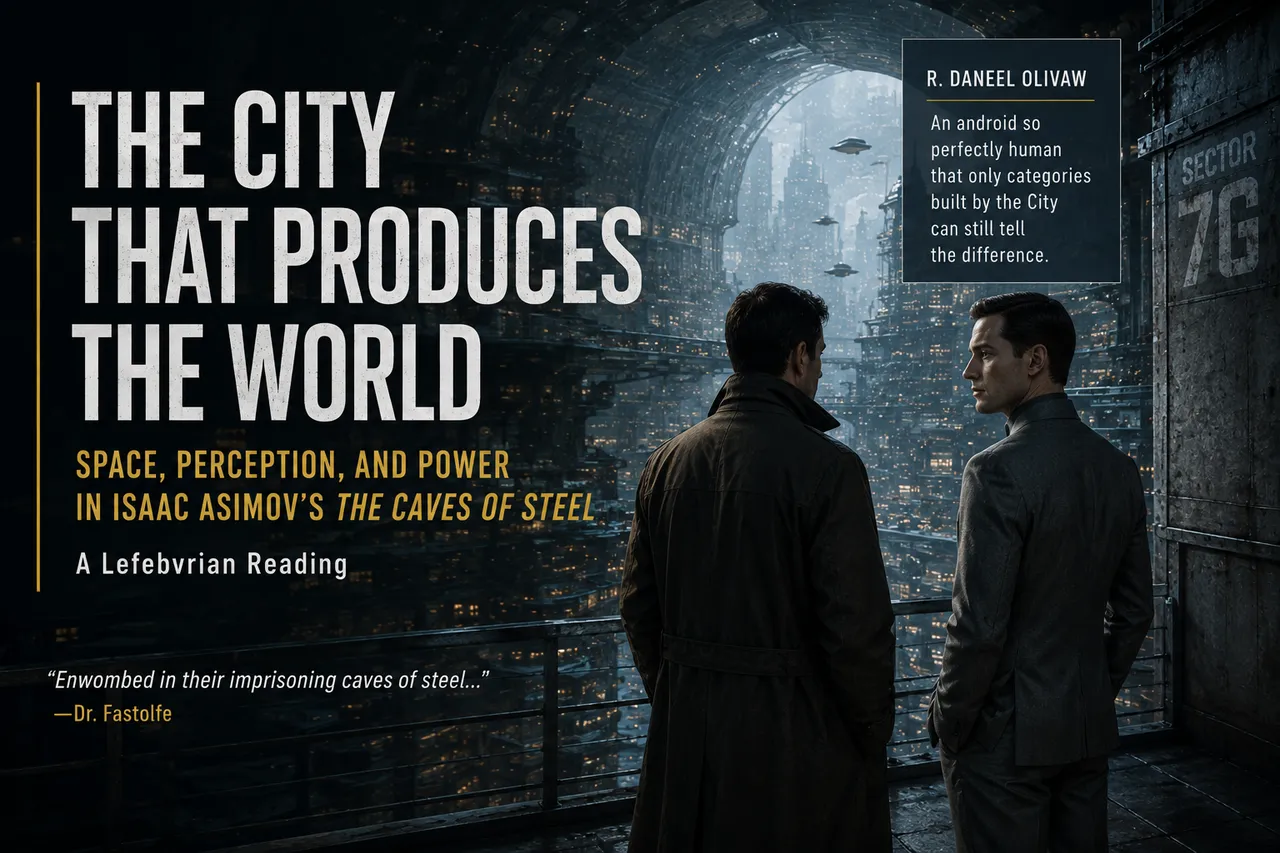
The Caves of Steel
Isaac Asimov::1954
An analysis of Isaac Asimov's The Caves of Steel on urbanization, social space, robots, and how the City shapes perception and historical possibility.
[sci-fi]
> read The Caves of Steel by Isaac Asimov
A passage for wanderers. We explore the stranger zones of literature — where imagination dissolves into mystery and fiction becomes a threshold between worlds.
// Total passages archived: 24
//Editorial line
This site does not rank books, avoid spoilers, or offer recommendations. It uses criticism to surface structures, tensions, and worldviews.
>read the manifesto//SEARCH ARCHIVE
live index
Isaac Asimov::1954
An analysis of Isaac Asimov's The Caves of Steel on urbanization, social space, robots, and how the City shapes perception and historical possibility.
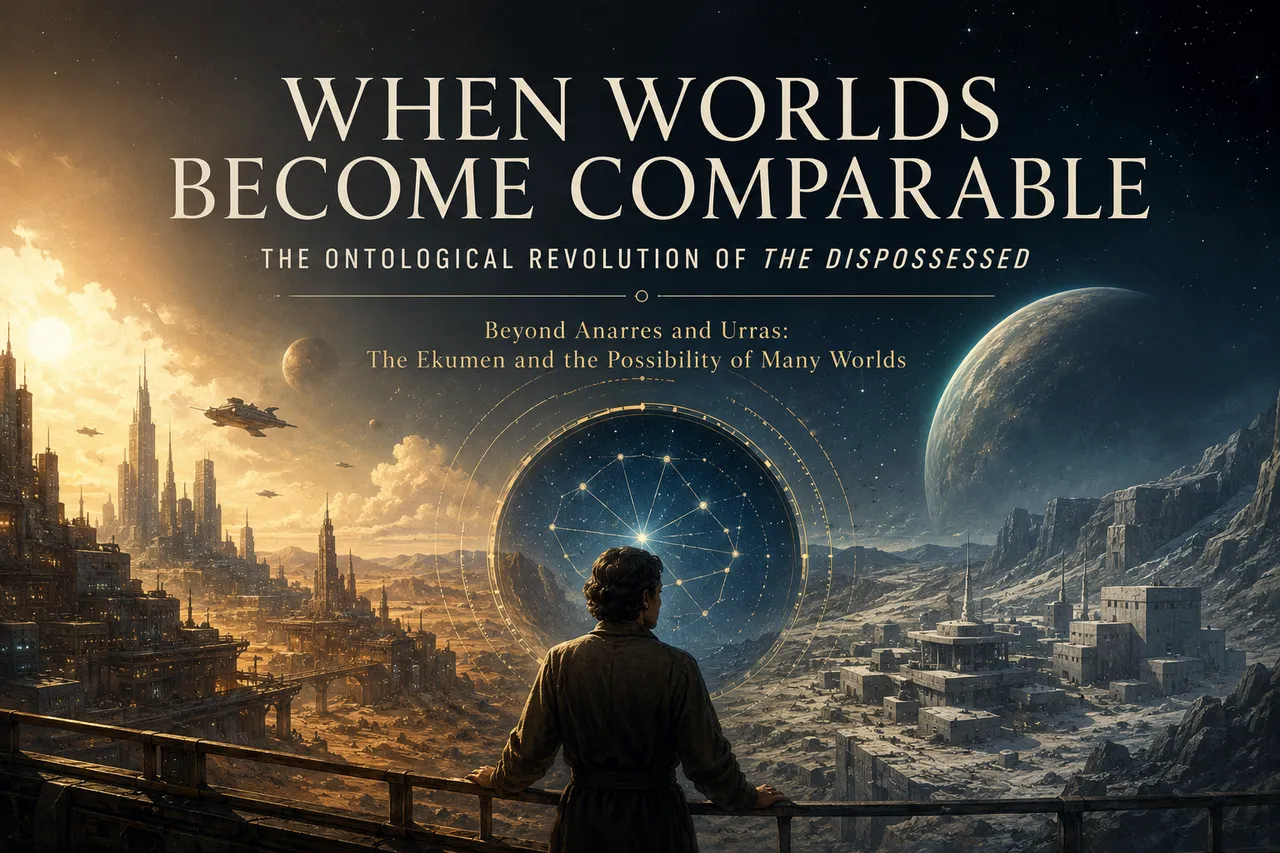
Ursula K. Le Guin::1974
A close reading of The Dispossessed as an ontological novel, where Anarres, Urras, and the Ekumen redefine anarchism, property, and reality.
Isaac Asimov·1954
An analysis of Isaac Asimov's The Caves of Steel on urbanization, social space, robots, and how the City shapes perception and historical possibility.
Ursula K. Le Guin·1974
A close reading of The Dispossessed as an ontological novel, where Anarres, Urras, and the Ekumen redefine anarchism, property, and reality.

J.G. Ballard·1962
Ballard's submerged London dissolves the symbolic structures through which humans produce meaning. A reading of contact, contamination, and the collapse of classification.
Stephen King·1982
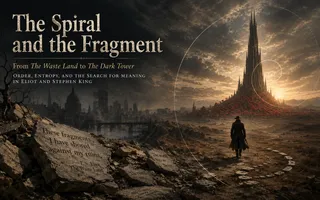
A literary analysis of Stephen King's *The Dark Tower* through T. S. Eliot's *The Waste Land*, focused on entropy, fragmentation, and the search for order.

Iain M. Banks·1987
A literary analysis of *Consider Phlebas* revealing how Iain M. Banks uses the frontier myth to stage Horza's obsolescence—examining the tragedy of a Golden Age hero rendered unnecessary by the Culture's declaration that the science fiction frontier has permanently closed.
Mervyn Peake·1946
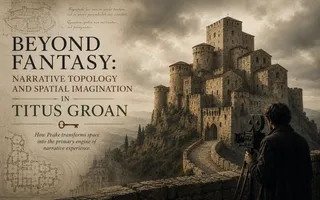
How Peake uses narrative topology to make space—not time—the engine of storytelling. A critical analysis of spatial imagination and architectural meaning.