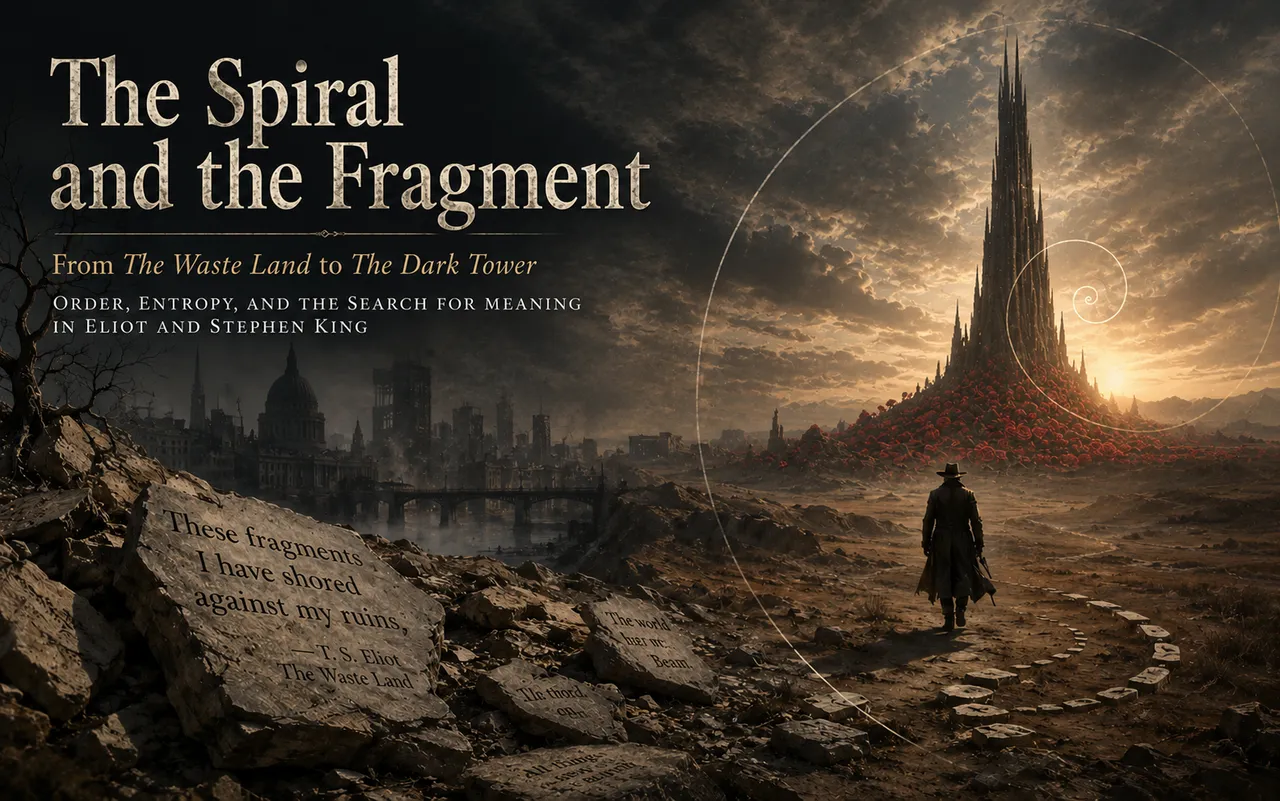
The Dark Tower
Stephen King::1982
A literary analysis of Stephen King's *The Dark Tower* through T. S. Eliot's *The Waste Land*, focused on entropy, fragmentation, and the search for order.
[fantasy][horror]
> read The Dark Tower by Stephen King
//ZONE
A collection of passages into horror literature
Horror invites us into the shadows of uncertainty. It is not mere gore, but the dissolution of comfortable certainties — the recognition that reality itself may be fundamentally more terrible and mysterious than we imagine. Here dwell the fears that reshape us.
//FRAMEWORK
This horror selection is built around destabilization: of perception, of domestic order, and of the border between the ordinary and the catastrophic. Instead of treating fear as a genre effect alone, the reviews read horror as a method for exposing hidden regimes of power, guilt, memory, and social violence. Attention goes to form and atmosphere as much as to themes, tracing how dread is engineered through pacing, voice, and image systems. The result is a map of works where terror functions as cultural diagnosis, revealing what a given historical moment struggles to name directly.
//RSS FEED
>subscribe to Horror feedStephen King::1982
A literary analysis of Stephen King's *The Dark Tower* through T. S. Eliot's *The Waste Land*, focused on entropy, fragmentation, and the search for order.
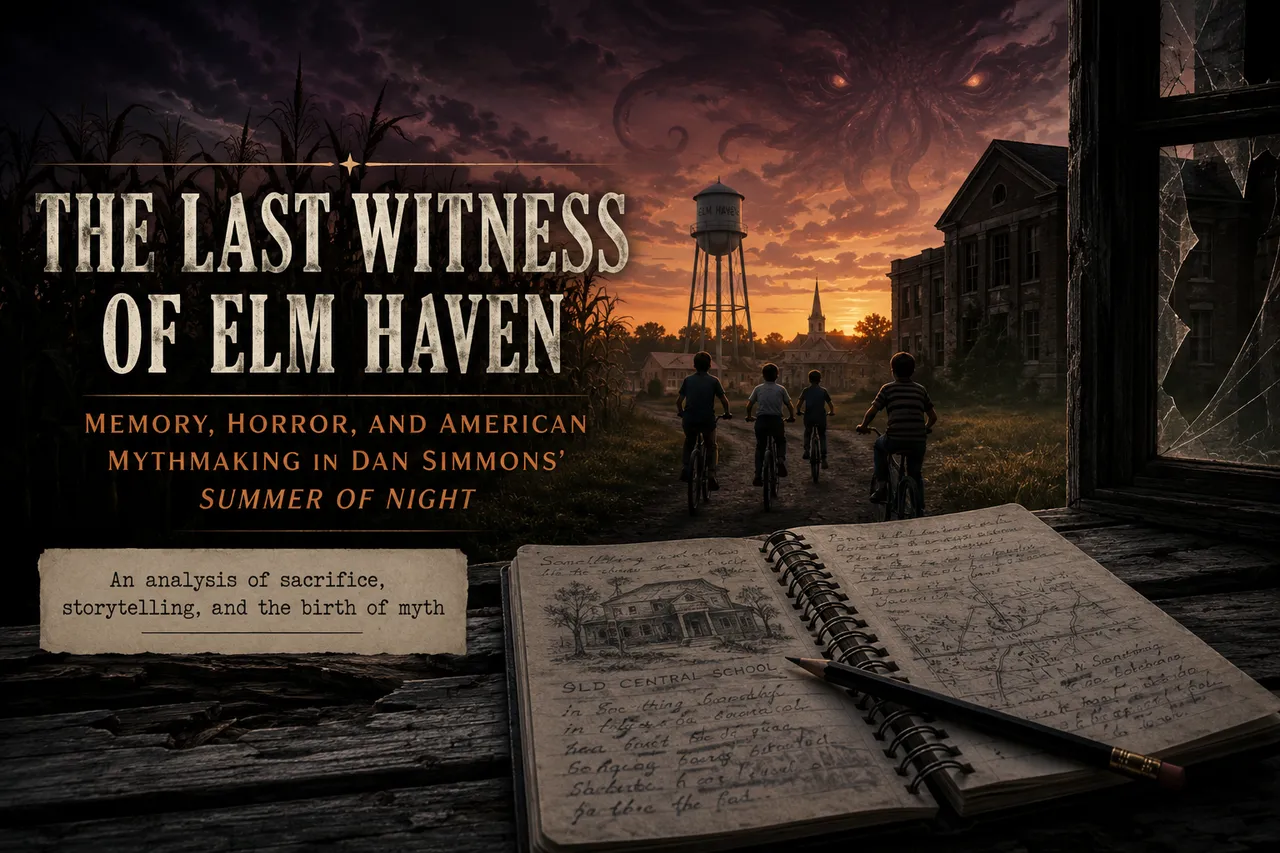
Dan Simmons::1991
Simmons' insight: horror sacrifies the ordinary. Elm Haven's true subject is memory itself—how communities recognize value only through loss and preservation.
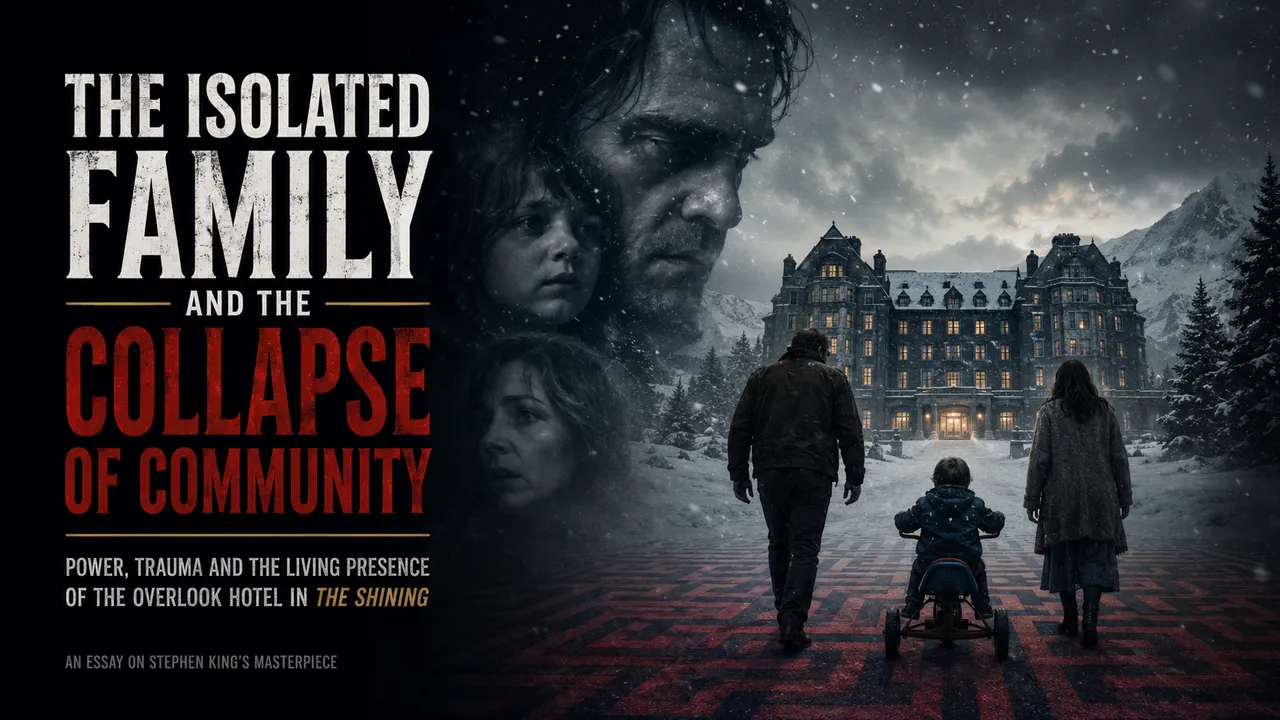
Stephen King::1977
King's insight: the nuclear family is incomplete without community. Absolute isolation accelerates violence by erasing the social structures that contain it.
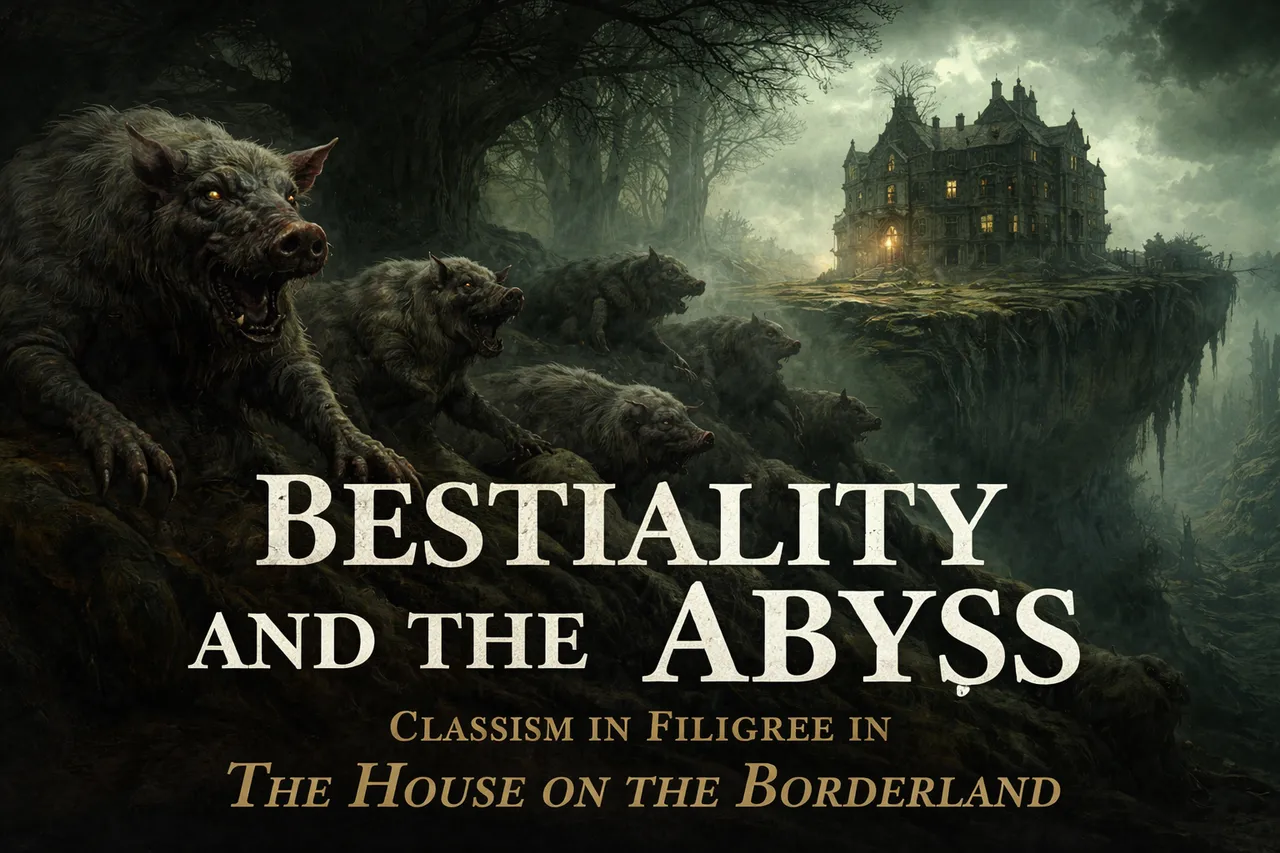
William Hope Hodgson::1908
Hodgson's filigree coding of degeneration: swine-creatures, regression, and the hidden classism of fin-de-siècle cosmic horror.
page 1 / 2